

Hey there! As a supplier of Wrap Around Packers, I often get asked about the calibration requirements for these machines. Calibration is super important to ensure that your Wrap Around Packer runs smoothly and efficiently, and it can also help you avoid a lot of headaches down the road. So, let's dive into what you need to know.
Why Calibration Matters
First off, let's talk about why calibration is such a big deal. A well - calibrated Wrap Around Packer will provide consistent and accurate packaging. This means that your products will be packed neatly, with the right amount of material, and in the correct orientation. It also helps to prevent jams and breakdowns, which can cost you a lot of time and money in production downtime.
Key Calibration Areas
1. Conveyor Speed
The conveyor speed is crucial for the proper functioning of a Wrap Around Packer. If the conveyor moves too fast, products may not be properly placed in the packaging, leading to misaligned or damaged packs. On the other hand, if it moves too slowly, it can slow down the entire production line.
To calibrate the conveyor speed, you'll need to use a speedometer or a similar measuring device. Start by setting the conveyor to a known speed and then measure the actual speed. Make adjustments as needed until the measured speed matches the desired speed. This may involve adjusting the motor settings or the belt tension.
2. Cutting and Sealing Mechanisms
The cutting and sealing of the packaging material are critical steps in the wrapping process. The cutting blade needs to be sharp and properly aligned to ensure clean cuts. A dull blade can cause rough edges or incomplete cuts, which can affect the integrity of the package.
For the sealing mechanism, the temperature and pressure need to be calibrated correctly. If the temperature is too low, the seal may not be strong enough, and the package could come apart. If it's too high, the packaging material may melt or burn. Use a temperature sensor and a pressure gauge to measure and adjust these settings.

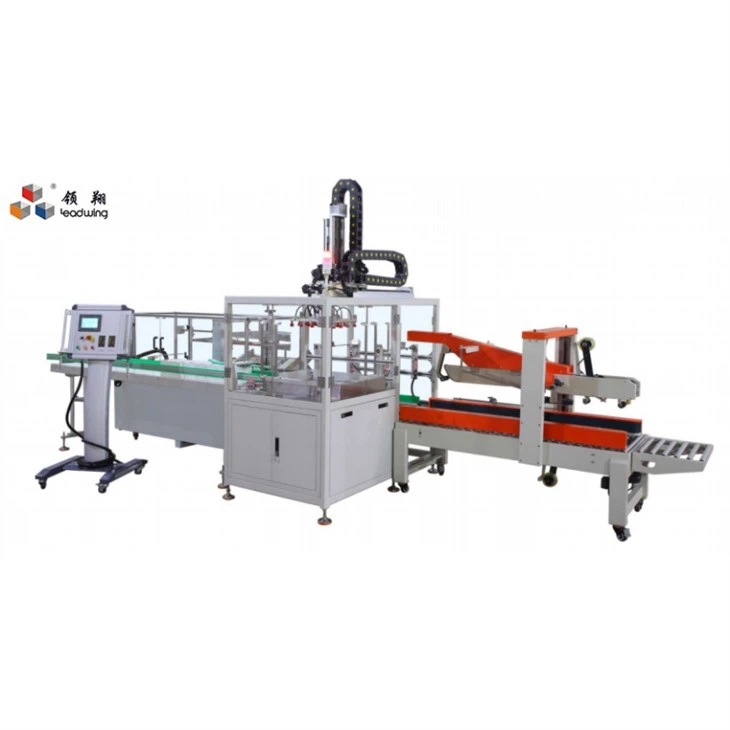
3. Product Placement
Accurate product placement is essential for a successful wrap - around packing operation. The machine should be calibrated to ensure that products are centered and spaced correctly within the packaging. This may involve adjusting the guides and stops on the conveyor or the pick - and - place mechanisms.
4. Wrap Tension
The tension of the wrapping material is another important factor. If the tension is too high, the packaging material may tear, and if it's too low, the package may not be tightly wrapped. You can use a tension meter to measure the tension and adjust the tensioning system accordingly.
Calibration Frequency
How often should you calibrate your Wrap Around Packer? Well, it depends on several factors, such as the frequency of use, the type of products being packed, and the operating environment. As a general rule, it's a good idea to calibrate your machine at least once a month. However, if you notice any issues with the packaging quality or the machine's performance, you should calibrate it immediately.
Tools and Equipment for Calibration
To calibrate your Wrap Around Packer, you'll need a few tools and pieces of equipment. These may include:
- Speedometer: To measure the conveyor speed.
- Temperature sensor: For calibrating the sealing temperature.
- Pressure gauge: To measure the sealing pressure.
- Tension meter: To measure the wrap tension.
- Alignment tools: Such as rulers and levels to ensure proper alignment of the cutting blade and other components.
Professional Calibration Services
While you can perform some basic calibration tasks on your own, it's often a good idea to have your Wrap Around Packer calibrated by a professional. Professional calibration services have the expertise and specialized equipment to ensure that your machine is calibrated accurately. They can also identify any potential issues and make recommendations for maintenance or repairs.
Comparison with Other Case Packers
It's worth noting that Wrap Around Packers are just one type of case packer. There are other options out there, such as Pick and Place Case Packer, Pusher Type Case Packer, and Drop Packer. Each type has its own calibration requirements and benefits.
Pick and Place Case Packers are great for handling delicate or irregularly shaped products. They use robotic arms to pick up products and place them in the packaging. Calibration for these machines often involves ensuring the accuracy of the robotic movements and the placement of the products.
Pusher Type Case Packers use a pusher mechanism to push products into the packaging. The calibration for these machines focuses on the speed and force of the pusher, as well as the alignment of the products.
Drop Packers are designed to drop products into the packaging from a height. Calibration for drop packers involves adjusting the height and the timing of the drop to ensure that the products are placed correctly.
Contact Us for Your Packing Needs
If you're in the market for a Wrap Around Packer or need help with calibration, don't hesitate to reach out. We're here to provide you with the best solutions for your packaging needs. Our team of experts can assist you in choosing the right machine, calibrating it, and providing ongoing support.
We understand that every business is unique, and we're committed to finding the perfect packing solution for you. Whether you're a small business just starting out or a large corporation with high - volume production needs, we've got you covered.
So, if you're ready to take your packaging to the next level, contact us today. Let's work together to make your packaging process more efficient and reliable.
References
- Packaging Machinery Manufacturers Institute (PMMI). "Best Practices for Packaging Machine Calibration."
- Industry publications on packaging technology and machinery maintenance.